🔬
What is it?
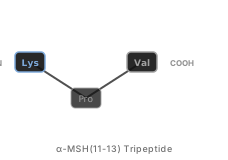
KPV is a tripeptide — just three amino acids: Lysine (K), Proline (P), and Valine (V) — derived from the C-terminal end of alpha-melanocyte stimulating hormone (α-MSH). Alpha-MSH is a well-known neuropeptide with potent anti-inflammatory properties, but it also activates melanocortin receptors responsible for pigmentation and appetite effects. Researchers became interested in isolating which part of the α-MSH molecule carries the anti-inflammatory activity — and the answer turned out to be this tiny three-amino-acid sequence at its tail end.
KPV retains much of the anti-inflammatory activity of full α-MSH but has a different receptor interaction profile. This makes it an interesting research tool for isolating the inflammatory mechanisms from the broader melanocortin receptor biology. It's exceptionally small — just three amino acids — which makes it highly stable, easy to synthesize with high purity, and potentially capable of penetrating mucosal surfaces (like the gut lining) in ways that larger peptides cannot.
Research interest has focused particularly on inflammatory gut disease models (colitis, IBD), skin inflammation models, and the NF-κB pathway — a master regulator of inflammation that KPV appears to directly influence in cell culture and animal models.
📡 Weekly peptide research updates — regulatory updates, new compound profiles, COA alerts.
⚠️ FDA PCAC: -- days left
No spam. Unsubscribe anytime. 7 peptides under review — see what's at stake →
⚡
Why Researchers Care
KPV has attracted research attention for several specific reasons that distinguish it from other anti-inflammatory peptides:
- Its tiny size (3 amino acids) makes it unusually resistant to enzymatic degradation — most peptides get chewed up rapidly by gut enzymes, but KPV's stability makes it interesting for oral delivery research models.
- Studies in inflammatory bowel disease models have shown KPV reducing inflammatory markers and protecting intestinal epithelial cells from cytokine-induced damage.
- KPV appears to directly inhibit NF-κB activation — this is the key molecular switch that turns on many inflammatory genes. Blocking it upstream can suppress a wide cascade of inflammatory mediators simultaneously.
- Unlike full α-MSH, KPV does not appear to activate MC1R or MC4R at significant levels, separating the anti-inflammatory activity from pigmentation and appetite effects — useful for research requiring clean mechanistic isolation.
- Skin research has explored KPV in wound healing and dermatitis models, where its anti-inflammatory and potentially antimicrobial properties have been examined.
⚙️
How It Works
KPV's primary documented mechanism involves inhibiting the NF-κB signaling pathway. NF-κB is a transcription factor — a protein that sits in the cell nucleus and directly controls which inflammatory genes get activated. Under normal conditions it's kept inactive; when the cell detects an inflammatory signal (like bacteria, cytokines, or tissue damage), NF-κB activates and switches on a whole program of inflammation genes.
KPV appears to interfere with the activation cascade that leads to NF-κB nuclear translocation — essentially blocking the molecular alarm signal before it reaches the control center. In intestinal epithelial cells specifically, this appears to reduce the production of pro-inflammatory cytokines like IL-6, TNF-alpha, and IL-1β. Additionally, KPV has been studied for its interaction with intracellular receptors (distinct from the cell-surface melanocortin receptors), which may explain part of its activity profile that differs from α-MSH.
Think of it like this 🧠
Imagine NF-κB as a fire alarm panel in a building — when one alarm goes off, it activates the entire building's alarm system, calling in firetrucks (inflammatory cells) and triggering sprinklers (cytokine release). KPV is like a technician who intercepts the initial alarm signal before it reaches the panel, stopping the cascade before the whole building goes on red alert. It doesn't permanently disable the alarm (you still need to be able to fight real fires), it just prevents runaway activation.
📐
Clinical Protocol Context
Research Disclaimer: The following reflects published clinical and preclinical research and is not medical advice. Consult a licensed healthcare provider before making any health decisions.
KPV (Lys-Pro-Val) research is predominantly preclinical, with well-documented in vitro and rodent model data for GI inflammation. It is currently on the PCAC July 2026 agenda for 503A evaluation, reflecting genuine regulatory interest in its clinical potential.
Dosing Ranges from Published Research
In Vitro / Cell Culture
Cell culture studies demonstrating NF-κB pathway inhibition and cytokine reduction have used KPV concentrations of 1–100 µM in macrophage and epithelial cell models. Dalmasso et al. (2008, PLoS ONE) documented anti-inflammatory effects at nanomolar concentrations in intestinal epithelial cells.
Preclinical Rodent (GI)
Rodent colitis models (DSS-induced) have used KPV oral administration at 2–10 mg/kg/day or intracolonic delivery at 50–100 µg. Laroui et al. (2014, J Control Release) used KPV-loaded nanoparticles for targeted GI delivery, with histological endpoint assessment at 7–14 days.
Routes, Duration & Timing
Oral / TopicalKPV is studied both orally (GI inflammation models) and topically (skin inflammation models). The tripeptide's small size supports transmucosal and transdermal delivery in research settings.
SubcutaneousSC administration also studied in systemic anti-inflammatory models. Brzoska et al. (2008) used SC KPV to study systemic effects on LPS-induced inflammation.
TimelineAnti-inflammatory cytokine reduction in GI models measurable at 24–72 hours. Histological improvement in colitis models documented at 7–14 day endpoints.
Key References: Dalmasso G et al. (2008). KPV anti-inflammatory effects in intestinal epithelia. PLoS ONE. · Laroui H et al. (2014). KPV nanoparticle delivery in colitis. J Control Release. · Catania A et al. (2004). Melanocortin tripeptide biology. Pharmacol Rev.
✨
Fun Facts
🧬
KPV is only three amino acids, making it one of the smallest peptides in the research library. At this size, it's sometimes called a "tripeptide" rather than a full peptide — but those three amino acids pack a surprisingly specific anti-inflammatory punch in cell culture models.
🦠
Some researchers have explored KPV in the context of microbiome-gut interactions. The gut lining is constantly in contact with trillions of bacteria, and KPV's mucosal penetration and anti-inflammatory properties make it interesting for studying how the gut manages the balance between responding to pathogens and tolerating healthy bacteria.
🧪
The alpha-MSH peptide from which KPV derives has been known since the 1950s for its role in pigmentation — it's what turns your skin brown in sunlight. The discovery that its tail-end tripeptide is actually doing heavy anti-inflammatory lifting was a decades-later insight that came from carefully dissecting which part of the molecule does what.
📋
COA & Batch Documentation
Every batch of KPV with full Certificate of Analysis documentation. Third-party HPLC verification, mass spectrometry confirmation, and sterility testing results are included with each batch.
📄
HPLC Certificate
Documentation pending batch assignment
🔬
Mass Spec Analysis
Documentation pending batch assignment
✅
Purity Report
Documentation pending batch assignment
🧪
Sterility Test
Documentation pending batch assignment
Learn about our COA verification process →