🔬
What is it?
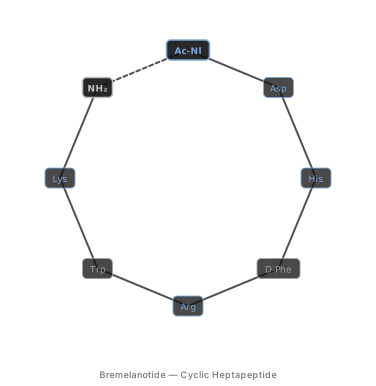
PT-141 (also known as Bremelanotide) is a synthetic peptide derived from Melanotan II. Where Melanotan II activates all melanocortin receptors broadly, PT-141 was developed to be more selective — focusing primarily on MC3R and MC4R, the brain-expressed receptors, while having less activity at MC1R (the pigmentation receptor). This selectivity makes it a cleaner research tool for studying the brain-based melanocortin system.
PT-141 has the distinction of being the first peptide to receive FDA approval for a neurological sexual dysfunction indication — it was approved in 2019 under the brand name Vyleesi for hypoactive sexual desire disorder (HSDD) in premenopausal women. This approval makes it one of the few research peptides that transitioned fully into clinical medicine.
The path from research compound to approved drug took decades. PT-141 was originally discovered as a byproduct of Melanotan II research in the 1990s, when researchers investigating MC receptor pharmacology noticed unexpected effects associated with MC4R activation. That observation launched a separate development track that eventually produced Vyleesi.
Its approval is scientifically notable not just for what it treats, but for how it works — PT-141 acts through the central nervous system (the brain) rather than through peripheral hormonal mechanisms, which was a genuinely new pharmacological category for its indication. This CNS mechanism is what makes it a continuing research tool for neuroendocrine scientists.
⚡
Por qué interesa a los investigadores
PT-141's combination of receptor selectivity and validated pharmacology — demonstrated through FDA approval — gives researchers a well-characterized tool for studying the central melanocortin system.
- PT-141 was the first FDA-approved drug acting through a central nervous system mechanism for sexual dysfunction — creating a new pharmacological category and validating the melanocortin approach to neuroendocrine research.
- Its selective activity at MC3R/MC4R (vs. MC1R) makes it a cleaner tool for studying central melanocortin system effects without the confounding variable of pigmentation changes.
- Investigacióners studying the hypothalamic melanocortin system — which regulates far more than sexual function, including stress, inflammation, and energy balance — use PT-141 as a reference compound with well-characterized receptor binding profiles.
⚙️
How It Works
PT-141 binds to MC4R receptors in the hypothalamus and limbic system (the brain's emotional and reward processing centers). This activation triggers downstream signaling through dopaminergic pathways — essentially activating neural circuits through a melanocortin mechanism rather than a purely hormonal one. Unlike peripherally-acting compounds that work by adjusting hormone levels in the bloodstream, PT-141's mechanism is central — it acts on the brain's regulatory systems directly. This makes it particularly valuable for researchers studying how hypothalamic MC4R signaling interfaces with dopamine reward circuits and other neuroendocrine networks.
Think of it like this 🧠
Think of MC4R as a dimmer switch in the brain's reward and arousal circuits. PT-141 is like a hand that turns the dimmer up — not by adding electricity directly, but by activating the switch mechanism. The lights (neural response) get brighter because the switch itself has been turned, not because more power came in from the outside.
📐
Contexto de Protocolo de Investigación
Investigación Renuncia de responsabilidad: Lo siguiente refleja investigación clínica y preclínica publicada y no es consejo médico. Consulta a un profesional de la salud licenciado antes de tomar decisiones de salud.
PT-141 (Bremelanotide) has the most extensive published human clinical data of any peptide in the recovery/research category — it completed phase III trials and received FDA approval as Vyleesi in 2019. This produces unusually concrete dosing data from fully powered randomized controlled trials.
Dosing Ranges from Published Investigación
FDA-Approved Dose
The FDA-approved Vyleesi formulation delivers 1.75 mg via autoinjector, administered subcutaneously approximately 45 minutes before anticipated activity. Clinical trial data (Simon et al., 2019, Obstet Gynecol; Portman et al., 2019, J Sex Med) demonstrated efficacy at this fixed dose in women with HSDD.
Dose Escalation — Male
Phase II male erectile dysfunction trials studied subcutaneous doses of 0.025–0.5 mg/kg. Safarinejad (2008, J Urol) reported efficacy at 0.025 mg/kg SC 2 hours before activity in men with ED unresponsive to PDE5 inhibitors, with the 1–2 mg absolute dose range producing reliable responses.
Nasal Formulation
Early phase II trials studied intranasal bremelanotide at doses of 7.5–20 mg (discontinued due to blood pressure effects with nasal route; SC route was selected for development). Diamond et al. (2006, J Sex Med) published the intranasal dose-response data.
Vías de Administración Estudiadas
Subcutánea
FDA-approved route. Abdominal SC autoinjection was selected after intranasal route showed hypertensive effects. SC administration produces peak plasma concentrations within 1 hour (Simon et al., 2019).
Intranasal
Used in early phase II trials. Associated with transient blood pressure increases of 6–9 mmHg systolic; SC route was selected for development due to more favorable hemodynamic profile.
Duraciones de Estudios y Cronogramas Observados
30–90 Min
Onset of central effects documented at 30–90 minutes post-SC injection in pharmacokinetic studies. The standard clinical protocol recommended administration 45 minutes before anticipated use.
Weeks 16–52
The phase III RECONNECT trials (Simon et al., 2019; Portman et al., 2019) ran 16–24 weeks with PRO endpoints. A 52-week open-label extension established long-term safety, with no tachyphylaxis and no evidence of melanocyte receptor downregulation at the approved dose.
Reconstitución y Almacenamiento
The FDA-approved Vyleesi formulation is a prefilled autoinjector with 1.75 mg/0.3 mL solution. Investigación-grade PT-141 is typically supplied as lyophilized powder for reconstitution. Stability data from the approved formulation: room temperature storage up to 30°C for the prefilled injector; lyophilized peptide stable at −20°C. Half-life approximately 2.7 hours in plasma.
Frecuencia y Tiempo
The FDA-approved label specifies use no more than once per 24 hours and no more than 8 times per month. This restriction was based on the phase III trial protocols and the transient blood pressure effects documented in clinical pharmacology studies. The RECONNECT trials documented a maximum 8 uses/month without loss of efficacy or tolerability issues in the 52-week extension (Simon et al., 2019).
Referencias Clave: Simon JA et al. (2019). Bremelanotide RECONNECT trial. Obstet Gynecol. · Portman DJ et al. (2019). Bremelanotide RECONNECT-2 trial. J Sex Med. · Safarinejad MR (2008). Bremelanotide in male ED. J Urol. · Diamond LE et al. (2006). Intranasal PT-141. J Sex Med.
✨
Datos Interesantes
✅
PT-141 (Bremelanotide) became an FDA-approved drug in 2019 — making it one of the very few peptides in the research library that crossed the regulatory finish line into approved medicine.
🧬
PT-141 was originally discovered while researching Melanotan II — researchers noticed that some subjects in Melanotan II studies reported unexpected effects, which led them to investigate the MC4R pathway specifically.
🧠
The hypothalamic melanocortin system is one of the most complex neuroendocrine regulatory networks known — it connects skin signals, energy status, stress, inflammation, and behavioral responses. PT-141 research has helped map parts of this system.
<\!-- COA & Batch Documentation -->
📋
Documentación COA y de Lotes
Every batch of PT-141 with full Certificate of Analysis documentation. Third-party HPLC verification, mass spectrometry confirmation, and sterility testing results are included with each batch.
📄
HPLC Certificate
Documentation pending batch assignment
🔬
Mass Spec Analysis
Documentation pending batch assignment
✅
Purity Report
Documentation pending batch assignment
🧪
Sterility Test
Documentation pending batch assignment
Learn about our COA verification process →