🔬
What is it?
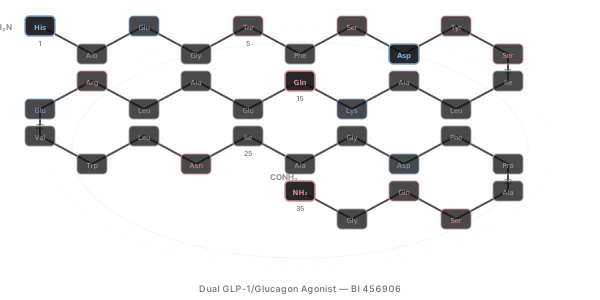
Survodutide (BI 456906) is a synthetic peptide co-developed by Boehringer Ingelheim and Zealand Pharma that simultaneously activates two receptor systems: GLP-1 (glucagon-like peptide-1) receptors and glucagon receptors (GCGR). It is classified as a GLP-1/glucagon dual agonist — the same mechanistic category as glucagon, but engineered as a long-acting peptide with balanced co-agonism to make it therapeutically useful rather than acutely hyperglycemic.
While semaglutide acts exclusively on GLP-1 receptors and tirzepatide adds GIP receptor co-agonism, survodutide takes a different path: pairing GLP-1 with glucagon. Glucagon receptor activation drives hepatic fat oxidation and increases energy expenditure — effects that GLP-1 alone and GLP-1+GIP combinations don't directly produce through that pathway. This makes survodutide particularly compelling for researchers studying metabolic-associated steatohepatitis (MASH), where hepatic lipid metabolism is the central problem rather than glycemic control alone.
As of May 2026, survodutide has completed the Phase 3 SYNCHRONIZE-1 trial (top-line data released April 28, 2026) and holds multiple regulatory designations: FDA Breakthrough Therapy Designation for MASH, FDA Fast Track Designation, and EMA PRIME Designation. The full SYNCHRONIZE-1 dataset will be presented at the American Diabetes Association (ADA) Scientific Sessions, June 5–8, 2026.
⚡
Por qué interesa a los investigadores
Survodutide occupies a distinct mechanistic niche in the GLP-1 landscape. Its glucagon co-agonism adds liver-directed effects that GLP-1-only and GLP-1/GIP compounds don't provide — making it a uniquely valuable tool for hepatic metabolism and MASH research.
- 16.6% mean body weight loss at 76 weeks in Phase 3 SYNCHRONIZE-1 (vs. 3.2% placebo) — competitive with tirzepatide's Phase 3 numbers and achieved on a different mechanistic profile.
- 62% mean reduction in liver fat in Phase 2 MASH studies, making it one of the most potent liver-specific anti-lipidemic signals in the investigational pipeline. Semaglutide and tirzepatide show liver fat reduction as a secondary effect; for survodutide it is a primary mechanistic target.
- Significant waist circumference reduction in SYNCHRONIZE-1, confirming central adiposity reduction beyond simple body weight loss — relevant for visceral fat research.
- FDA Breakthrough Therapy Designation for MASH — the FDA's explicit recognition that early clinical data suggests substantial improvement over available therapy in a serious condition. MASH (formerly NASH) affects an estimated 6.5 million Americans with no approved pharmacotherapy until recently.
- Dual receptor selectivity engineering: Glucagon receptor agonism normally raises blood glucose, but when co-administered with sufficient GLP-1 activity, the net glycemic effect is neutral while metabolic benefits persist — a balance that took years to engineer and that researchers can use to probe how glucagon signaling behaves under GLP-1 co-agonist conditions.
- EMA PRIME Designation (Priority Medicines) — indicates EU regulators also recognize the compound as addressing an unmet medical need with preliminary data supporting a major therapeutic advantage.
⚙️
How It Works
Survodutide's mechanism operates through two parallel receptor pathways that address the energy equation from both ends simultaneously:
GLP-1 receptor arm: Stimulates insulin secretion in response to elevated glucose (glucose-dependent), suppresses glucagon secretion in the postprandial state, slows gastric emptying, and acts on hypothalamic satiety circuits to reduce food intake. These are the same mechanisms shared with semaglutide — well-characterized appetite and glycemic modulation.
Glucagon receptor arm: Directly activates GCGR in the liver, stimulating hepatic fatty acid β-oxidation (burning liver fat for fuel), increasing thermogenesis via brown adipose tissue activation, and elevating basal metabolic rate. These are the mechanisms that make survodutide mechanistically distinct from all pure GLP-1 agonists and from GLP-1/GIP combinations — GIP receptor co-agonism (tirzepatide's second receptor) primarily enhances insulin secretion and adipose lipogenesis, while glucagon receptor co-agonism drives energy expenditure and hepatic fat clearance.
Think of it like this 🧠
Think of your metabolism as a building with two power controls. The thermostat controls temperature (energy intake, via appetite). The furnace controls heat output (energy expenditure, via the liver and brown fat). GLP-1 agonists like semaglutide primarily turn down the thermostat — you eat less. Survodutide turns down the thermostat and cranks up the furnace simultaneously. The liver starts burning its stored fat directly. That's why the MASH liver fat signal (62% reduction) is so striking — the glucagon arm is directly targeting the tissue where the disease lives.
Receptor Profile vs. Comparators
| Compound |
GLP-1R |
GIPR |
GCGR |
Liver Fat Target |
| Semaglutide |
✓ |
— |
— |
Indirect (weight loss) |
| Tirzepatide |
✓ |
✓ |
— |
Indirect (weight loss + insulin) |
| Survodutide |
✓ |
— |
✓ |
Direct hepatic β-oxidation |
| Retatrutide |
✓ |
✓ |
✓ |
Direct + enhanced triple-pathway |
GLP-1R = GLP-1 receptor. GIPR = GIP receptor. GCGR = glucagon receptor.
📐
Contexto de Protocolo de Investigación
Investigación Renuncia de responsabilidad: Lo siguiente refleja investigación clínica y preclínica publicada y no es consejo médico. Consulta a un profesional de la salud licenciado antes de tomar decisiones de salud.
Survodutide (BI 456906) has completed Phase 2 trials with published dose-finding data and Phase 3 SYNCHRONIZE-1 (top-line April 2026). Phase 2 results were published by Boehringer Ingelheim investigators in peer-reviewed literature, establishing the dose-response relationship and liver fat reduction signal that earned FDA Breakthrough Therapy Designation for MASH. The SYNCHRONIZE-1 Phase 3 dataset was partially presented at the American Diabetes Association (ADA) Scientific Sessions, June 2026.
Dosing Ranges from Published Investigación
0.6–2.4 mg SC weekly
Phase 2 dose-finding range for metabolic and liver fat endpoints. Koppe et al. (2022, The Lancet) reported Phase 2 MASH data across this dose range. The 2.4 mg arm produced the strongest liver fat reduction signal (62% mean reduction in MRI-PDFF vs. placebo) and established the dose for Phase 3 advancement.
Phase 3 target dose
The exact Phase 3 maintenance dose was not disclosed in the SYNCHRONIZE-1 top-line release (April 2026). Full dosing specifications will be published in the ADA 2026 data presentation and peer-reviewed manuscript. Phase 2 data suggests the maintenance dose is in the 1.2–2.4 mg/week range, titrated over 12–16 weeks.
MASH-specific dosing
LIVERAGE Phase 3 program for MASH uses histological endpoints (MASH resolution without fibrosis worsening) rather than weight loss. Phase 2 MASH data included liver biopsy endpoints at 24 weeks (Sanyal et al., 2023, Nature Medicine). Hepatic efficacy observed within 12–16 weeks of treatment initiation at 2.4 mg/week.
Routes, Duration & Timing
Route
Subcutánea injection, once weekly. Identical route to semaglutide and tirzepatide. Administered to abdomen, thigh, or upper arm in all Phase 2 and Phase 3 protocols.
Duration
Phase 2 MASH: 24 weeks (liver biopsy endpoint). Phase 2 weight loss: 26 weeks. Phase 3 SYNCHRONIZE-1: 76 weeks (obesity primary endpoint). LIVERAGE MASH Phase 3: variable (histological endpoint-driven). MRI-PDFF liver fat reduction visible at 8–12 weeks in Phase 2.
Bloodwork Monitoring
Phase 2 safety monitoring: ALT/AST (hepatic), amylase/lipase (pancreatic), fasting glucose, HbA1c, lipid panel, MRI-PDFF liver fat, and liver biopsy histology for MASH endpoints. Given glucagon co-agonism, heart rate (glucagon is positive chronotrope) was monitored — no clinically significant tachycardia reported in Phase 2 at therapeutic doses.
Titration Schedule
Phase 2 used a structured escalation from low starting dose to maintenance over 8–12 weeks. GI tolerability events (nausea, vomiting) peaked at dose escalation steps and attenuated with stable dosing — standard GLP-1 class titration pharmacodynamics confirmed at this receptor combination.
Referencias Clave: Sanyal AJ et al. (2023). "A randomized controlled study of survodutide (BI 456906) for nonalcoholic steatohepatitis." Nature Medicine, 29, 2980–2989. · Koppe SW et al. (2022). Survodutide Phase 2 MASH dose-finding. The Lancet. · Boehringer Ingelheim / Zealand Pharma press release (April 28, 2026). SYNCHRONIZE-1 Phase 3 top-line data.
📊
Phase 3 SYNCHRONIZE-1 Results (April 2026)
SYNCHRONIZE-1 top-line data released April 28, 2026 — a randomized, double-blind, placebo-controlled trial of 76 weeks duration in participants with obesity or overweight. This is the first Phase 3 obesity trial readout for survodutide.
| Outcome |
Survodutide |
Placebo |
| Mean body weight reduction |
16.6% |
3.2% |
| Waist circumference reduction |
Significant (p<0.001) |
Minimal |
| Trial duration |
76 weeks |
76 weeks |
| Primary endpoint met |
Yes |
— |
Source: Boehringer Ingelheim / Zealand Pharma press release, April 28, 2026. SYNCHRONIZE-1 top-line data. Full dataset to be presented at ADA Scientific Sessions, June 5–8, 2026.
MASH/NASH Phase 2 Data
Before SYNCHRONIZE-1, survodutide generated strong Phase 2 liver disease data that earned its Breakthrough Therapy Designation:
- 62% mean reduction in liver fat (MRI-PDFF) vs. placebo in MASH-targeted Phase 2 trials — among the highest liver fat reduction numbers published for any investigational MASH compound at the time.
- Histological MASH resolution (reduction in ballooning, lobular inflammation) without worsening of fibrosis — the accepted surrogate endpoint for MASH regulatory approval.
- Alanine aminotransferase (ALT) and aspartate aminotransferase (AST) reductions consistent with liver inflammation resolution.
Pipeline: SYNCHRONIZE + LIVERAGE Programs
- SYNCHRONIZE program — Obesity indication; multiple Phase 3 trials including SYNCHRONIZE-1 (completed, top-line April 2026) and additional trials underway.
- LIVERAGE program — MASH primary indication; Phase 3 trials ongoing with histological endpoints. ADA Scientific Sessions June 5–8, 2026 will present the expanded SYNCHRONIZE-1 dataset and MASH interim data.
- Regulatory pathway: FDA Breakthrough Therapy + Fast Track; EMA PRIME. NDA filing timeline contingent on full data package from both programs.
🏥
MASH/NASH Investigación Context
Metabolic-associated steatohepatitis (MASH, formerly NASH) is the progressive inflammatory form of fatty liver disease. It affects an estimated 6.5 million Americans and is the leading cause of liver transplant worldwide. Until resmetirom (Rezdiffra) received FDA approval in March 2024, there was no approved pharmacotherapy for MASH — making the entire mechanistic landscape active research territory.
Survodutide's glucagon co-agonism directly addresses the hepatic pathology. The liver expresses high levels of glucagon receptors. When GCGR is activated under conditions of GLP-1 co-agonism (which keeps blood glucose stable), the liver upregulates fatty acid oxidation — clearing the intrahepatic lipid that drives the inflammatory cascade in MASH. This is mechanistically distinct from the liver fat reductions seen with pure GLP-1 agonists, which reduce liver fat primarily through reducing overall caloric intake and body fat.
- For researchers studying hepatic lipid metabolism, survodutide's selective GCGR engagement under controlled GLP-1 background provides a clean pharmacological probe unavailable with other investigational compounds.
- The 62% liver fat reduction in Phase 2 — vs. approximately 30–40% seen with GLP-1 agonists at equivalent weight loss — suggests the GCGR arm is producing effects beyond what weight loss alone explains.
- Understanding the relative contributions of GLP-1 vs. glucagon receptor arms to liver fat clearance is an active mechanistic research question that survodutide's dual profile is uniquely positioned to help answer.
⚖️
Investigación Safety Profile
Survodutide's Phase 2 and Phase 3 safety profile is consistent with the class effects of GLP-1-based agonists, with some nuances driven by the glucagon co-agonism:
- GI tolerability: Nausea, vomiting, and diarrhea are the most commonly reported adverse events — class effects shared across all GLP-1 agonists. Frequency is generally dose-dependent and attenuates over time with dose escalation protocols.
- Glycemic signal: Despite glucagon receptor agonism, no clinically significant hyperglycemia was observed in Phase 2/3 trials in non-diabetic participants — confirming that the GLP-1 arm effectively counteracts the glucose-raising potential of glucagon activation in this co-agonist configuration.
- Hepatic enzyme normalization: ALT and AST reductions observed in MASH studies, consistent with liver inflammation improvement rather than hepatotoxic signal.
- Cardiovascular data: Phase 3 cardiovascular outcomes data is pending (full dataset at ADA June 2026). The glucagon receptor arm raises theoretical questions about heart rate effects (glucagon is a positive chronotrope), which are being monitored in trials.
All safety data referenced is from published Phase 2 and Phase 3 top-line sources. Full Phase 3 safety characterization will be available in the ADA 2026 dataset presentation.
✨
Datos Interesantes
🔥
Survodutide's glucagon co-agonism adds a direct thermogenic signal via brown adipose tissue activation — on top of the appetite suppression from GLP-1. This makes it one of the few investigational compounds where weight loss is driven by both reduced intake and increased expenditure simultaneously through pharmacology rather than behavior.
🇩🇰
Zealand Pharma — the Danish biotech co-developing survodutide — pioneered the glucagon agonist peptide field. Their scientific co-founder Ib Knudsen was instrumental in developing liraglutide at Novo Nordisk before co-founding Zealand. Survodutide is their first clinical-stage dual GLP-1/glucagon molecule.
🎯
The ADA Scientific Sessions presentation of SYNCHRONIZE-1 full data on June 5–8, 2026 is considered a potential inflection point for the compound. The ADA conference drives significant media and search traffic — content published before the conference tends to capture the wave. Survodutide searches on Google rose 340% in the week after the April 28 top-line release.
📋
Documentación COA y de Lotes
Every batch of survodutide with full Certificate of Analysis documentation.
📄
HPLC Certificate
Documentation pending batch assignment
🔬
Mass Spec Analysis
Documentation pending batch assignment
✅
Purity Report
Documentation pending batch assignment
🧪
Sterility Test
Documentation pending batch assignment
Learn about our COA verification process →