🔬
What is it?
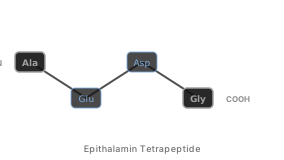
Epitalon is a synthetic tetrapeptide — just four amino acids: Alanine-Glutamic acid-Aspartic acid-Glycine (Ala-Glu-Asp-Gly) — developed by Professor Vladimir Khavinson and the St. Petersburg Institute of Bioregulation and Gerontology beginning in the 1980s. It was engineered as a synthetic analog of Epithalamin, a natural polypeptide fraction extracted from bovine pineal glands, as part of a systematic effort to isolate and replicate what researchers believed were the pineal gland's aging-modulatory properties.
With a molecular weight of approximately 390.3 Da, Epitalon is among the smallest synthetic peptides studied for longevity applications. Most research peptides run 15–40+ amino acids — the fact that a four-residue sequence produces measurable biological effects across multiple systems (telomeres, circadian rhythms, antioxidant pathways, immune function) is one of the reasons it has attracted sustained scientific interest. Khavinson's research group at the St. Petersburg institute has published extensively on Epitalon across four decades, producing one of the longest continuous peptide longevity research programs in published scientific literature.
Epitalon achieved international prominence primarily through its association with telomerase activation — the enzyme responsible for extending telomeres, the protective caps at chromosome ends that shorten with each cell division. This connection to telomere biology made Epitalon a key research tool in the rapidly growing field of cellular aging science.
📡 Weekly peptide research updates — regulatory updates, new compound profiles, COA alerts.
⚠️ FDA PCAC: -- days left
No spam. Unsubscribe anytime. 7 peptides under review — see what's at stake →
⚡
Why Researchers Care
Epitalon sits at the convergence of three active research areas — telomere biology, pineal gland science, and aging mechanisms — making it unusually relevant across multiple disciplines simultaneously.
- Telomere biology and aging: The telomere shortening hypothesis of cellular aging is one of the most extensively studied theories in geroscience. Epitalon's proposed telomerase-activating mechanism makes it a pharmacological research tool for testing whether telomere dynamics in living cells can be pharmacologically shifted — a question with fundamental implications for understanding replicative senescence.
- Pineal gland and circadian regulation: The pineal gland is the primary source of melatonin and is central to circadian rhythm coordination. Research shows circadian dysregulation accelerates aging phenotypes across multiple systems. Epitalon has been studied for normalizing pineal gland output and melatonin synthesis in aged animal models where these rhythms have already degraded — making it a research tool for the circadian-aging intersection.
- Antioxidant pathway modulation: Multiple studies have documented Epitalon's effects on antioxidant enzyme activity — particularly superoxide dismutase (SOD) and catalase — in animal models. Oxidative stress is a key mechanism in cellular aging, and compounds that influence these pathways are of significant research interest for their role in aging biology.
- Data density from a single research group: The St. Petersburg institute's four decades of Epitalon research spans somatic and reproductive models, multiple species, cancer incidence tracking, immune marker analysis, and lifespan studies. While the concentration of data from a single group warrants independent replication, the sheer volume and duration of the published record makes Epitalon unusually well-documented compared to most longevity-focused research peptides.
- Size as a research variable: At just four amino acids, Epitalon is a useful model compound for studying peptide bioregulation — investigating how minimal peptide sequences influence gene expression, enzyme activity, and cellular behavior. Researchers can use it to ask fundamental questions about the mechanism of small peptide biological activity that would be structurally harder to study with larger compounds.
⚙️
How It Works
Epitalon is proposed to act through three primary and interconnected pathways. The research literature does not present a single unified mechanism — rather, the evidence suggests a pleiotropic compound with overlapping effects across cellular and systemic biology.
Primary mechanism — Telomerase activation: Cell culture studies, most prominently work by Khavinson and colleagues including Vaiserman and others, have documented that Epitalon stimulates telomerase activity in several cell line models. The proposed mechanism involves Epitalon interacting with gene regulatory elements that control telomerase expression — effectively upregulating transcription of the hTERT (human telomerase reverse transcriptase) catalytic subunit, which is the rate-limiting component of telomerase activity in human somatic cells. By increasing hTERT expression, Epitalon is proposed to extend the replicative capacity of treated cells by allowing telomere maintenance across more divisions than would occur in untreated controls. The practical implication in cell culture models is that cells treated with Epitalon in some studies continued dividing beyond typical Hayflick limit endpoints.
Secondary mechanism — Pineal gland and melatonin regulation: As an analog of the pineal-derived Epithalamin, Epitalon has been studied for effects on the hypothalamo-pituitary axis and pineal gland function. Research in aged animal models — where melatonin synthesis has typically declined significantly — has documented Epitalon-associated normalization of melatonin output and circadian rhythm patterns. The proposed mechanism involves Epitalon's interaction with pinealocytes (pineal gland cells), modulating the enzymatic pathways (particularly arylalkylamine N-acetyltransferase, or AANAT) that govern melatonin synthesis. This circadian restoration effect is proposed as one mechanism contributing to the broader anti-aging phenotype observed in long-term animal studies.
Tertiary effects — Antioxidant enzyme and immune modulation: Studies in aging animal models have documented increases in antioxidant enzyme activity (SOD, catalase, glutathione peroxidase) following Epitalon administration, alongside changes in immune markers including NK cell activity and cytokine profiles. These effects appear downstream of the primary signaling actions and may partially mediate the lifespan and cancer incidence changes observed in long-term rodent studies.
Think of it like this 🧠
Every time a cell copies itself, the protective tips at the ends of your chromosomes — telomeres — fray a little, like the plastic cap on a shoelace wearing down. Telomerase is the enzyme that re-tips the shoelace. Normally, telomerase is switched off in most adult cells. Epitalon is being studied as a signal that turns up the volume on telomerase expression — the core research question is whether you can pharmacologically tell cells to keep maintaining their chromosome tips for longer, and what downstream effects that produces. Meanwhile, its pineal gland connection means it may also be resetting the aging body's internal clock — addressing the circadian component of age-related decline at the same time.
📊
Research Summary
The Epitalon research record spans over 40 years, primarily originating from the St. Petersburg Institute of Bioregulation and Gerontology, with growing international interest. Key documented research areas:
- Telomerase activation in cell culture: Khavinson et al. published evidence of Epitalon-stimulated telomerase activity in several human cell culture studies. One frequently cited study (Khavinson et al., 2003, Bulletin of Experimental Biology and Medicine) documented telomere elongation in human somatic cells treated with Epitalon compared to controls. The mechanism proposed was hTERT upregulation, enabling cells to maintain telomere length through more division cycles than untreated controls.
- Lifespan extension in animal models: Long-term studies in rats and Drosophila have reported statistically significant lifespan increases in Epitalon-treated groups. Anisimov et al. published multiple studies documenting 13–25% lifespan extension in rodent models, alongside reductions in tumor incidence in cancer-prone strains. These studies represent some of the longest continuous longevity research datasets for any synthetic peptide, though independent international replication remains limited.
- Melatonin and circadian restoration: Studies in aged female rats with documented melatonin decline showed Epitalon-associated restoration of melatonin synthesis patterns toward younger-animal baselines. This circadian normalization effect was correlated with changes in immune function and hormonal profiles, supporting the hypothesis that part of Epitalon's effect profile is mediated via the pineal-melatonin axis rather than (or in addition to) direct telomerase effects.
- Antioxidant and immune markers: Multiple papers have documented increases in superoxide dismutase and catalase activity in aged rodent tissues following Epitalon treatment. NK cell activity, which typically declines with age, showed normalization toward younger-animal levels in some studies. These findings position Epitalon as a potential research tool for studying immunosenescence — the age-related decline of immune system function.
- Cancer incidence modulation: In cancer-prone rodent strains (including HER2/neu transgenic mice predisposed to mammary tumors), long-term Epitalon treatment was associated with reduced tumor incidence and delayed tumor appearance compared to controls. These data contributed to early research interest in Epitalon's potential role in oncology research contexts.
- Reproductive aging: A distinctive body of work examined Epitalon's effects on reproductive aging in female rats, documenting preservation of estrous cycle regularity and gonadotropin profiles into older age compared to untreated controls. This reproductive preservation phenotype has been cited as additional evidence of a systemic anti-aging effect profile beyond any single mechanism.
The majority of Epitalon research originates from one Russian research group. All referenced studies involve laboratory or animal models. Content is for educational purposes and does not constitute medical advice.
🧪
Literature Dosing Protocols
⚠️ Research Use Only — the following is drawn exclusively from published scientific literature and does not constitute medical advice.
Published research involving Epitalon has used a range of administration approaches depending on the model system and research endpoint. The following reflects what appears in the peer-reviewed record:
Preclinical Dose Range
0.5–5 mg/kg
Subcutaneous or intraperitoneal routes in rodent longevity studies; dose and frequency varied by study design
Administration Route
SC / IP (preclinical)
Subcutaneous and intraperitoneal injection used in animal studies; intranasal studied for CNS access
Study Duration
Weeks to lifetime
Short-term cell culture (days), medium-term rodent protocols (weeks), and full lifespan longevity studies all documented
Molecular Weight
~390.3 Da
Very low MW for a bioactive peptide; facilitates membrane permeability and absorption relative to larger peptides
Epitalon's small size (4 amino acids, ~390 Da) is a pharmacologically relevant feature — it improves bioavailability relative to larger peptides and allows for multiple administration route options across different research model types.
🛡️
Safety & Side Effect Profile
Epitalon has an unusually long preclinical safety record by longevity peptide standards, given four decades of active research use at the originating institute:
- Favorable acute and chronic tolerability in animals: Across decades of rodent studies including full-lifespan longevity protocols, Epitalon has not been associated with significant organ toxicity, weight loss, behavioral deterioration, or organ pathology in treated animals. The absence of major adverse findings in long-duration studies is the strongest safety signal available for any preclinical compound.
- No documented genotoxicity or mutagenicity: Unlike concerns that have been raised about telomerase activation in the context of cancer biology (since some tumors co-opt telomerase for uncontrolled replication), preclinical data from Khavinson's research group has consistently shown reduced cancer incidence in Epitalon-treated groups rather than increased — an important distinction that researchers designing protocols around telomerase-targeting compounds need to understand and monitor for.
- Circadian interaction requires timing consideration: Given Epitalon's proposed effects on melatonin synthesis and pineal gland function, researchers designing circadian-sensitive protocols should account for administration timing relative to light-dark cycles in animal housing. Melatonin-relevant endpoints may be confounded by administration timing effects.
- Independent replication gap: The majority of safety (and efficacy) data originates from one research group at one institution. The favorable safety profile is consistent across this body of work, but the absence of extensive independent international replication means researchers should treat the existing record as a promising signal rather than a fully established safety database.
- No human clinical trial safety data available: Unlike Semax (which achieved pharmaceutical approval in Russia with associated clinical monitoring data), Epitalon has no equivalent prescription approval history. Human safety data does not exist in any formal clinical trial or pharmacovigilance framework — a critical distinction researchers must account for in protocol design and risk characterization.
Safety information is drawn from published peer-reviewed literature. For research use only. Not for human or veterinary administration.
⚖️
FDA Regulatory Context — 2026
📅
PCAC Day 2 Agenda — July 24, 2026
Epitalon is scheduled for Pharmacy Compounding Advisory Committee (PCAC) evaluation on July 24, 2026 — Day 2 of the committee's two-day review. Semax and DSIP are on the same Day 2 agenda. The public comment period closes July 9, 2026.
Epitalon's regulatory status has evolved significantly in the 2025–2026 period as the FDA's Pharmacy Compounding Advisory Committee (PCAC) has been systematically evaluating peptide compounds used in compounding pharmacy. Understanding this regulatory context is important for researchers, institutions, and anyone tracking the compound's access and legal status in the United States.
Pre-2026
Epitalon was placed on the FDA's 503B Bulks "Category 2" list — compounds with insufficient safety/efficacy evidence for compounding, pending further review. Category 2 status created uncertainty for compounding pharmacies sourcing or dispensing Epitalon.
April 15, 2026
FDA removed Epitalon from the Category 2 list. This removal did not constitute approval for compounding — it removed the specific Category 2 designation while the compound awaits formal PCAC review. Access and status remained in a transitional state pending the scheduled committee evaluation.
July 9, 2026
Public comment deadline. Researchers, institutions, and stakeholders may submit public comments to the docket regarding Epitalon's compounding suitability ahead of the July 24 PCAC meeting. The docket number and submission instructions are available at regulations.gov.
July 24, 2026
PCAC Day 2 evaluation. The Pharmacy Compounding Advisory Committee is scheduled to evaluate Epitalon,
Semax, and DSIP on Day 2 of its two-day meeting. The committee will assess available safety and efficacy data and make a recommendation to FDA on whether Epitalon is appropriate for use in 503A (patient-specific) and/or 503B (outsourcing facility) compounding. The committee's recommendation is advisory — FDA retains final authority.
What PCAC evaluation means: A PCAC evaluation is an advisory process — the committee reviews evidence and makes a non-binding recommendation to FDA. A favorable recommendation does not constitute drug approval, RDA approval, or any authorization for human use. An unfavorable recommendation does not prohibit research use. The outcome affects access through licensed compounding pharmacies operating under 503A/503B frameworks; it has no bearing on the legal status of Epitalon for research use only (RUO) purposes. Axis Research Lab follows this process as a matter of educational transparency for researchers tracking the regulatory landscape.
✨
Fun Facts
🔢
At just four amino acids, Epitalon is one of the smallest biologically active peptides ever studied for systemic aging effects. For comparison, MOTS-c runs 16 amino acids and BPC-157 runs 15. The fact that a four-residue sequence may influence telomerase expression, melatonin production, and immune markers simultaneously is considered one of the genuinely surprising findings in peptide bioregulation research.
🏛️
Professor Khavinson's St. Petersburg institute has been studying pineal-derived peptides since the 1970s — making it one of the longest-running single-site longevity peptide research programs in scientific history. The Institute published its first Epitalon results in the 1980s and continues publishing today, providing a 40+ year longitudinal dataset on a single compound that very few research peptides can match.
🌙
The pineal gland — the origin point of Epitalon's research lineage — was famously called the "third eye" by philosophers and described by Descartes as the "seat of the soul." Modern biology reveals it as the primary circadian master regulator, controlling the release of melatonin in response to light-dark cycles. The entire longevity research trajectory of Epitalon traces back to trying to understand what this philosophically mythologized gland actually does biochemically.
🧬
COA Standards & What to Look For
When evaluating third-party testing documentation for Epitalon, researchers should verify the following in any Certificate of Analysis:
- Sequence confirmation and HPLC purity: Epitalon (Ala-Glu-Asp-Gly) should be confirmed by HPLC with purity ≥98% for research-grade material. The COA should specify the tetrapeptide sequence — not truncated or extended variants. At ~390.3 Da, any mass discrepancy in supporting mass spec data signals a wrong compound.
- Mass spectrometry verification: LC-MS or MALDI-TOF confirmation of the correct molecular weight (~390.3 Da) is essential. Epitalon's small size makes it important to verify the full intact tetrapeptide rather than fragment contamination — a common issue in small peptide synthesis at commercial scale.
- Residual solvents panel: Solid-phase peptide synthesis involves organic solvents (DMF, DCM, TFA, acetonitrile). A complete COA should confirm residual solvent levels meet USP/ICH Class 1 and 2 thresholds. This is especially important for very small peptides where solvent-to-product ratios in the final material can be higher.
- Counter-ion specification: Research-grade Epitalon is typically supplied as the trifluoroacetate (TFA) salt from reverse-phase HPLC purification. Some suppliers convert to acetate. The COA should specify the counter-ion — it affects the actual peptide content per unit mass and matters for precise dosing calculations in protocols.
- Endotoxin testing: Lyophilized Epitalon intended for reconstitution and injectable research use should include endotoxin testing (LAL/BET method) confirming levels below 1 EU/mg.
📄
HPLC Certificate
Documentation pending batch assignment
🔬
Mass Spec Analysis
Documentation pending batch assignment
✅
Purity Report
Documentation pending batch assignment
🧪
Sterility Test
Documentation pending batch assignment
Learn about our COA verification process →