🔬
What is it?
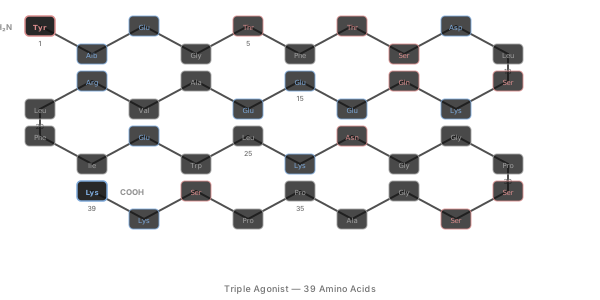
Retatrutide (LY3437943) is a synthetic peptide developed by Eli Lilly that simultaneously activates three distinct receptor systems: GLP-1 (glucagon-like peptide-1), GIP (glucose-dependent insulinotropic polypeptide), and glucagon receptors. While GLP-1 agonists like semaglutide target a single receptor, and dual agonists like tirzepatide work on two receptors, Retatrutide represents a third generation of multi-receptor metabolic pharmacology. The addition of glucagon receptor agonism — which directly drives energy expenditure and hepatic fat oxidation — is what separates its mechanism from all predecessors.
As of late 2025, Retatrutide has completed its first Phase 3 trial (TRIUMPH-4) and has eight Phase 3 trials currently active across three programs: TRIUMPH (obesity), TRANSCEND (type 2 diabetes), and SYNERGY (MASLD/liver disease). The complete trial program has enrolled over 5,800 participants. TRIUMPH-4 top-line data released in December 2025 showed 28.7% average body weight reduction at the 12mg dose — the highest ever recorded in a Phase 3 obesity trial, rivaling bariatric surgery outcomes. Remaining trial readouts are expected throughout 2026, with a potential NDA filing in late 2026 and FDA approval around mid-to-late 2027.
📡 Weekly peptide research updates — regulatory updates, new compound profiles, COA alerts.
⚠️ FDA PCAC: -- days left
No spam. Unsubscribe anytime. 7 peptides under review — see what's at stake →
⚡
Why Researchers Care
Retatrutide's triple receptor profile makes it a uniquely valuable tool for investigating how metabolic pathways interact when activated in combination. The TRIUMPH-4 Phase 3 data delivered the most striking efficacy numbers ever recorded in a Phase 3 obesity trial.
- 28.7% average body weight reduction at 12mg dose over 68 weeks (TRIUMPH-4) — exceeds outcomes from every GLP-1 and dual agonist studied to date, and rivals surgical bariatric intervention benchmarks.
- Triple receptor activation (GLP-1 + GIP + glucagon) allows researchers to study the additive vs. synergistic effects of targeting all three incretin/glucagon pathways simultaneously — a question that couldn't be answered with any prior compound.
- The glucagon receptor arm drives energy expenditure and hepatic fat oxidation. Unlike GLP-1 alone, glucagon normally raises blood glucose, but when combined with GLP-1 agonism, the net effect on glucose is neutral while metabolic rate increases — opening new mechanistic questions for energy balance research.
- Secondary outcomes in TRIUMPH-4 included significant reductions in systolic blood pressure (−14.0 mmHg at 12mg), non-HDL cholesterol, triglycerides, and hsCRP — making it relevant to cardiovascular and metabolic inflammation research beyond weight alone.
- TRIUMPH-4 also demonstrated substantial relief from knee osteoarthritis pain: 75.8% WOMAC pain score reduction at 12mg, with 12% of participants completely pain-free at week 68 vs. 4.2% placebo — an unexpected finding creating new research interest in weight-loss-mediated joint inflammation.
⚙️
How It Works
Retatrutide binds to and activates GLP-1 receptors (stimulating insulin release and slowing gastric emptying), GIP receptors (enhancing insulin response and potentially supporting fat tissue regulation), and glucagon receptors (increasing energy expenditure). The three-pathway activation creates a layered metabolic effect that each individual target cannot produce alone. Researchers are still working to disentangle how much of the observed effect comes from each receptor arm, and how the three systems interact when activated simultaneously by a single molecule.
Think of it like this 🧠
Think of your metabolic system like a concert with three conductors who normally work in separate venues. GLP-1 conducts the insulin orchestra. GIP fine-tunes the backup singers. Glucagon runs the energy department's lighting crew. Retatrutide is like putting all three conductors on the same stage at the same time — the combined performance is different from what any one of them could produce solo.
📐
Clinical Protocol Context
Research Disclaimer: The following reflects published clinical and preclinical research and is not medical advice. Consult a licensed healthcare provider before making any health decisions.
Retatrutide (LY3437943) has completed Phase 1 and Phase 2 trials, with the first Phase 3 readout (TRIUMPH-4) published in December 2025. Phase 2 data — published by Jastreboff et al. (2023, New England Journal of Medicine) — established the dose-response relationship across 1, 2, 4, 8, and 12 mg weekly doses in 338 participants over 48 weeks. This makes retatrutide one of the few triple-agonist compounds with peer-reviewed Phase 2 dose-ranging data available.
Dosing Ranges from Published Research
1–4 mg SC weekly
Low-dose Phase 2 arms (Jastreboff et al., 2023, NEJM). At 48 weeks: 1 mg arm showed 8.7% mean weight reduction; 4 mg showed 17.5%. Both statistically significant vs. placebo (2.1%). Established minimum effective dose threshold for meaningful metabolic effect.
8 mg SC weekly
Phase 2 mid-high arm — 22.8% mean weight reduction at 48 weeks (Jastreboff 2023 NEJM). The steepest efficacy gain in the dose-response curve occurred between 4 mg and 8 mg. 91% of participants achieved at least 5% weight loss; 75% achieved at least 10% weight loss.
12 mg SC weekly
Highest published dose — 24.2% mean weight reduction at 48 weeks in Phase 2; 28.7% at 68 weeks in TRIUMPH-4 Phase 3. This is the highest efficacy dose in the TRIUMPH program and the dose producing the record-setting Phase 3 outcomes. Titration from 2 mg over 4-week increments used in all trials.
2 mg SC weekly (start)
Universal initiation dose in Phase 2 and Phase 3 TRIUMPH trials. Escalation in 2 mg increments every 4 weeks to target maintenance dose. Slow titration protocol was specifically designed to attenuate GI tolerability events — nausea and vomiting incidence was significantly lower in structured-titration arms versus rapid escalation.
Routes, Duration & Timing
Route
Subcutaneous injection, once weekly. Abdomen, thigh, or upper arm sites used in Phase 2 and Phase 3 protocols. Identical to tirzepatide and semaglutide administration protocols.
Duration
Phase 2: 48 weeks (primary endpoint). Phase 3 TRIUMPH-4: 68 weeks. Additional TRIUMPH Phase 3 trials (TRIUMPH-1, TRIUMPH-2) are enrolled for longer observation windows. No published maximum duration established — ongoing trials exploring multi-year safety windows.
Bloodwork Monitoring
Phase 2 safety monitoring included: fasting glucose, HbA1c, lipid panel, liver enzymes (ALT/AST), amylase/lipase (pancreatic safety), calcitonin (thyroid C-cell monitoring), and body composition at Weeks 12, 24, 36, and 48. Glucagon receptor engagement requires monitoring for unexpected gluconeogenic effects in non-obese research subjects.
GI Tolerability Window
Nausea was most common in weeks 1–12 of each dose escalation step. Phase 2 data showed that structured 4-week escalation increments substantially reduced discontinuation due to GI events versus rapid escalation approaches. GI events generally resolved within 4–6 weeks of reaching a stable dose.
Key References: Jastreboff AM et al. (2023). "Triple-hormone-receptor agonist retatrutide for obesity — a Phase 2 trial." New England Journal of Medicine, 389(6), 514–526. · Eli Lilly press release (December 2025). TRIUMPH-4 Phase 3 top-line results (NCT05931367). · Bergmann NC et al. (2023). Retatrutide Phase 1 safety and PK. Diabetes, Obesity and Metabolism.
📊
Phase 3 TRIUMPH Results (December 2025)
TRIUMPH-4 was a 68-week, randomized, double-blind, placebo-controlled trial in 445 participants with obesity or overweight and moderate-to-severe knee osteoarthritis (84% with baseline BMI ≥35). It is the first completed Phase 3 trial in the TRIUMPH program and delivered the highest weight loss outcomes ever recorded in a Phase 3 trial of any anti-obesity compound.
| Outcome |
9mg Dose |
12mg Dose |
Placebo |
| Avg. body weight reduction |
26.4% (64.2 lbs) |
28.7% (71.2 lbs) |
2.1% (4.6 lbs) |
| ≥25% weight loss achieved |
— |
58.6% of participants |
— |
| ≥30% weight loss achieved |
— |
39.4% of participants |
— |
| WOMAC knee pain reduction |
— |
75.8% improvement |
— |
| Systolic blood pressure |
— |
−14.0 mmHg |
— |
Source: Eli Lilly press release, December 2025. TRIUMPH-4 (NCT05931367). Full data pending peer-reviewed publication.
TRIUMPH Phase 3 Program — Trial Status
TRIUMPH-4 is the first readout. Seven additional trials are active, with results expected throughout 2026:
- TRIUMPH-1 & TRIUMPH-2 — General obesity and type 2 diabetes; largest enrollment trials; top-line results expected Q2–Q3 2026
- TRIUMPH-3 — Obesity with sleep apnea (OSA)
- TRANSCEND program — Type 2 diabetes primary indication
- SYNERGY program — MASLD/MASH (metabolic-associated liver disease)
- Projected NDA filing: Late 2026 (pending remaining trial data)
- Projected FDA approval: Mid-to-late 2027; commercial availability late 2027–early 2028
⚖️
Market Context for Researchers: Eli Lilly IP Pressure
Researchers sourcing Retatrutide for laboratory work should understand the current legal and regulatory landscape — it directly affects compound availability and pricing.
- No FDA-approved version exists. Unlike semaglutide or tirzepatide, Retatrutide has never been approved by the FDA and was never placed on a shortage list. This means the compounding exemptions that existed for tirzepatide (as a shortage item) never applied to Retatrutide. Any compounded Retatrutide technically lacks a legal basis under 503A/503B compounding rules — it has no USP/NF monograph and is not an approved drug component.
- Eli Lilly has aggressively pursued compounders. Following its TRIUMPH-4 announcement in December 2025, Lilly has increased enforcement activity against vendors producing Retatrutide analogs and unapproved copies, having previously sued multiple compounders over tirzepatide knockoffs (including Mochi Health, Fella Health, Empower Pharmacy, and others). Research vendors have faced increasing legal scrutiny.
- Supply scarcity is a direct consequence. Legal pressure from Lilly has caused multiple research vendors to discontinue or limit Retatrutide availability. Researchers should expect constrained supply, variable pricing, and potential gaps in availability as the NDA filing timeline approaches and enforcement intensifies.
- This is a research-only context note. Axis Research Lab provides this as factual background for researchers navigating the compound landscape. All compounds in this library are Research Use Only (RUO). This is not legal advice.
✨
Fun Facts
🏆
The 28.7% average body weight loss in TRIUMPH-4 is the highest ever recorded in a Phase 3 clinical trial for any anti-obesity compound — exceeding all prior GLP-1 and GLP-1/GIP agonists and approaching the range of bariatric surgery (typically 25–35% excess weight loss).
🦴
TRIUMPH-4's knee osteoarthritis data was a surprise. 12% of participants on the 12mg dose were completely pain-free at 68 weeks vs. 4.2% on placebo — an unexpected finding that has opened new research questions about how metabolic improvement affects joint inflammation.
🔬
Creating a single molecule that activates three receptor classes at appropriate ratios is considered one of the hardest problems in peptide medicinal chemistry. Glucagon without adequate GLP-1 co-agonism would raise blood sugar — the balance engineering took Eli Lilly years to perfect.
📋
COA & Batch Documentation
Every batch of Retatrutide with full Certificate of Analysis documentation.
📄
HPLC Certificate
Documentation pending batch assignment
🔬
Mass Spec Analysis
Documentation pending batch assignment
✅
Purity Report
Documentation pending batch assignment
🧪
Sterility Test
Documentation pending batch assignment
Learn about our COA verification process →